
Field work is not only about data, let's really talk about it.
Our initiative is supported by la Société Francophone de Primatologie
Next dates: Workshop "Fieldwork preparation" 16h30-18h30 on 23/11 [FR] and 30/11 [EN] 2026


Safety and well-being in the field
Let's Talk Fieldwork
Have you already done fieldwork as part of a study/data collection or is that a dream of yours?
If so, this site is the place to be!
Let’s talk fieldwork is a work group made by researchers and students of all horizons who felt the urge and need to help you prepare your first fieldwork assignment, to help better prepare your next one, help you learn from others’ valuable experience and share your stories to improve fieldwork conditions together!
What is fieldwork?
Fieldwork, more often than not, consists of leading observational studies to study organisms in a specific area (natural areas, rural areas, urban areas, etc), outside of the laboratory. It necessitates a direct contact with the natural environment or the concerned communities.
Let’s talk fieldwork is a collective of young scientists that have led fieldwork missions across the world and are committed to promote well-being and safety of fieldworkers.
We wish to raise awareness among fieldworkers, engineers, technicians, students, supervisors and institutions to mitigate and minimize the challenges encountered in the field. We focus on practical solutions and long term impact.

Our objectives
Fieldwork challenges
Fieldwork is an enriching adventure, but it also comprises its own unique set of challenges. Physical and mental difficulties, extreme weather conditions, isolation and loneliness, culture chocs, logistical difficulties, living as part of a community…. Each fieldwork assignment is unique and asks for meticulous planning. Let’s talk fieldwork enables the fieldwork community to exchange about their past experiences, anticipate future difficulties and to share advice to better face challenges.
Risk assessment
Working in the field implies facing and managing a diversity of risks: safety, health, or even the unexpected. Our support group sheds light on these problems and offers strategies to limit these risks and improve working conditions in the field. Together, we can share solutions to work with peace of mind.
Practical solutions
Each fieldwork experience is rich in teachings. Thanks to conversations and testimonies, let’s talk fieldwork helps to identify and put in place tangible solutions to improve well-being and safety of fieldworkers, researchers and professionals combined. Every discussion brings important advice and point of views that are relevant for everyone.

The team
Here are all the members of our Administrative board, comprised of extremely active and passionate individuals who oversee the smooth running of the group and the development of safety and well-being measures in the field.
*co-creators of Let's Talk Fieldwork

Harmonie Klein *
Ethologist and doctoral student at the University of St Andrews (Scotland), Harmonie has been studying the behaviours of wild chimpanzees in the African tropical rainforests since 2017. In 2025, she has approximately 50 months of fieldwork n Gabon and Uganda under her belt as a research assistant, student and manager in more or less remote field sites. After being around the block a few times and after countless interactions, Harmonie rapidly noticed that the majority of fieldworkers were faced with the same recurring challenges. She decided to remedy this by creating this group.

Caroline Fryns *
Ethologist and doctoral student at the Laboratory of Compared Cognition at the University of Neuchâtel (Switzerland), Caroline is specialised in animal communication, particularly the great apes. Within these past ten years, she has undertaken fieldwork as a student, research assistante and research manager in several primatology field sites located in Indonesia, Tanzania and Uganda. Thanks to her field experience, she was able to witness first hand the range of practices and pedagogical approaches and is now dedicated to finding ways these can be shared and improved upon to make the field more enjoyable for everyone.

Noémie Cappelle *
Doctor in primatology (Max Planck Insitute in Leipzig) and currently project manager at Biotope. Noémie specialized in the conception of ecological studies on great apes and other African mammals. With more than 10 years of working in the field on and off, most often bivouacking, she has notably worked for more than four years with the Wild Chimpanzee Foundation, an NGO dedicated to the protection of chimpanzees. Her expertise lies in camera trap sampling methods applied to protected areas.

Céline Bocquet
A Master's graduate in ethology, she has undertaken several fieldwork studies lasting a few weeks up to 14 consecutive months in France and abroad. Her research interest is primarily on the physiology of king penguins (Crozet archipelago) or on the social behaviours of meerkats (South Africa).
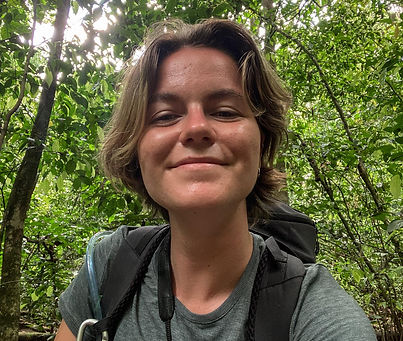
Romane Leten
She holds a master's degree in ethology from Utrecht University. During her studies, she completed several field research internships with great apes. Her work in Tanzania and Uganda focused on chimpanzees, with a particular interest in the female reproductive cycle. She subsequently conducted research in Gabon on gorilla communication. She has a particular interest in the social dynamics and cultural behaviors of great apes in Africa.

Chloé Couturier
Holding a PhD in Ecology and Conservation Biology, she has been studying chimpanzee behavior since 2015. She has carried out seven field missions (lasting 3 to 6 months) in Kibale National Park in Uganda and Taï National Park in Côte d'Ivoire. After a first postdoctoral position at the Max Planck Institute for Evolutionary Anthropology in Leipzig, Germany, she is currently a research fellow on the One Forest Vision project at the Musée de l'Homme in Paris (MNHN, France). She is also a freelance illustrator and a member of the Project for the Conservation of Great Apes (PCGS).

Gwennan Giraud
She is a group member of Technological Primates at the Max Planck Institute in Leipzig, in Germany since 2023. Field primatologust since 2015, Gwennan studies the behaviour of primates in Africa (chimpanzees) and in Asia (long tail macaques). She has also worked on ornithology projects in Europe, diversifying her fieldwork experiences. With a cumulated total of five years of field experience, Gwennan was faced with many varied and impromptu situations which are an integral part of fieldwork. Before the creation of Let's talk fieldwork, she had participated in workshops focused on fieldwork hazards and happenings which motivated her to join in Harmonie's efforts and join this group to share her experiences and advice with individuals preparing their field assignments.

Séverine Toussaint
CNRS researcher at the Muséum National d'Histoire Naturelle of Paris, she studies the evolution of arboreal adaptations in mammals with an multidisciplinary expertise combining ethology and paleontology together. She has observed multiple species of primates, rodents, carnivores, marsupials and scadentiens in zoological parks and in their natural environments and participates in paleontological excavations (Cenozoic) in France. She regularly supervises fieldwork missions and students in different biological subjects (behavioural ecology, biomechanics, and paleontology)
![20220505_113150[1]_edited.jpg](https://static.wixstatic.com/media/6d616d_30010afff22e44e985bb85fd9f874aca~mv2.jpg/v1/fill/w_403,h_341,al_c,q_80,usm_0.66_1.00_0.01,enc_avif,quality_auto/20220505_113150%5B1%5D_edited.jpg)
Pepe Albert Guilavogui
Pépé is a Water and Forest Environment Engineer, holding a Master’s degree in Biodiversity and Sustainable Development with a specialization in plant diversity from Gamal Abdel Nasser University in Conakry, Guinea. From 2012 to 2019, he worked at the National Herbarium of Guinea as an assistant curator, responsible for processing plant, seed, and fungal specimens. From 2019 to 2023, he worked with the Wild Chimpanzee Foundation in the Moyen Bafing National Park as a Biomonitoring Program Officer, coordinating the installation of camera traps for the study of animal species, particularly chimpanzees. Since 2023, he has been a Biodiversity Research Officer (plants and animals) with the mining company Winning Consortium Simandou.

Hugo Leroy
A PhD student in evolutionary genetics, he studies hybridation in marmosets in the tropical rainforests of Brazil.

Nora Bennamoun
Primatologist specializing in the behavioral ecology of chimpanzees, she has worked with savanna chimpanzees in East and West Africa, particularly in Guinea and Tanzania. She is currently a PhD candidate at the University of Warsaw, Poland. Her thesis aims to integrate ecological, behavioral, and genetic approaches to study the factors explaining the current spatial distribution of an unhabituated chimpanzee population in the Central African Republic, located in the magnificent Chinko Nature Reserve.

Ilona Robert
Veterinary student at the École Nationale Vétérinaire de Toulouse with a passion for primatology, ecology, conservation and veterinary medicine. Her career goal is to become a veterinarian working in great ape conservation. To achieve this, she completed her first field experience in Uganda, and she is continuing the journey during her gap year, working alongside various species of non-human primates, including chimpanzees, in the Republic of the Congo, Uganda and France. Ilona is also a Roots & Shoots student with the Jane Goodall Institute France and a member of the association Vétérinaires pour la Biodiversité.
Former members
Former members who helped set up the current working group or develop its content

Mélissa Berthet
(Former member)
A specialist in animal communication, she has led several field missions in Europe, Latin America and Africa to observe primates in their natural environment, record their vocalisations and conduct ethological experiments. She has supervised many students and assistants in scientific fieldwork, with an ethical and inclusive approach centred on physical and mental well-being and on people’s safety.
Melissa is no longer active in running the group, but she played a major part in setting it up and regularly joins us for our training sessions.

Sharline Cully
(Former member)
She holds a master’s degree in organismal biology and is passionate about the study of animal behaviour. She has carried out field missions in Europe and India on various taxa of birds and mammals.
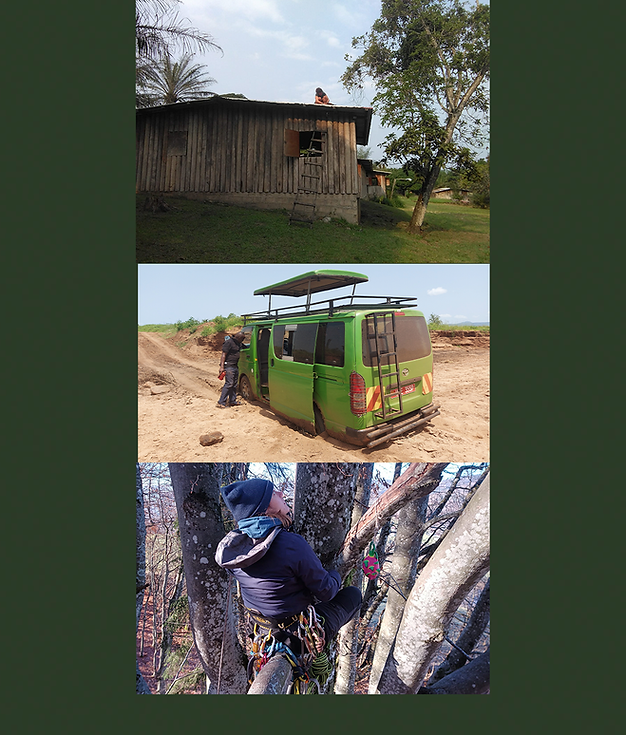
"Fieldwork is not just about collecting data, let’s truly talk about it"
Join us!